
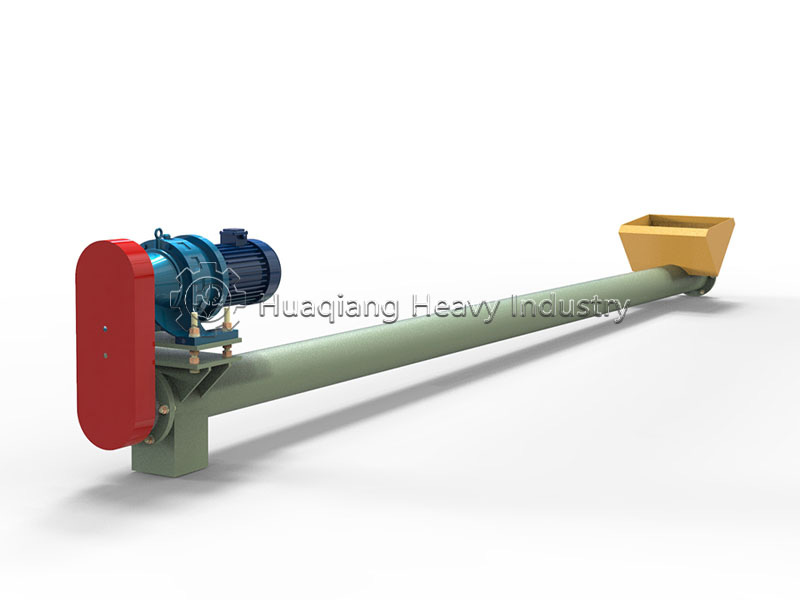
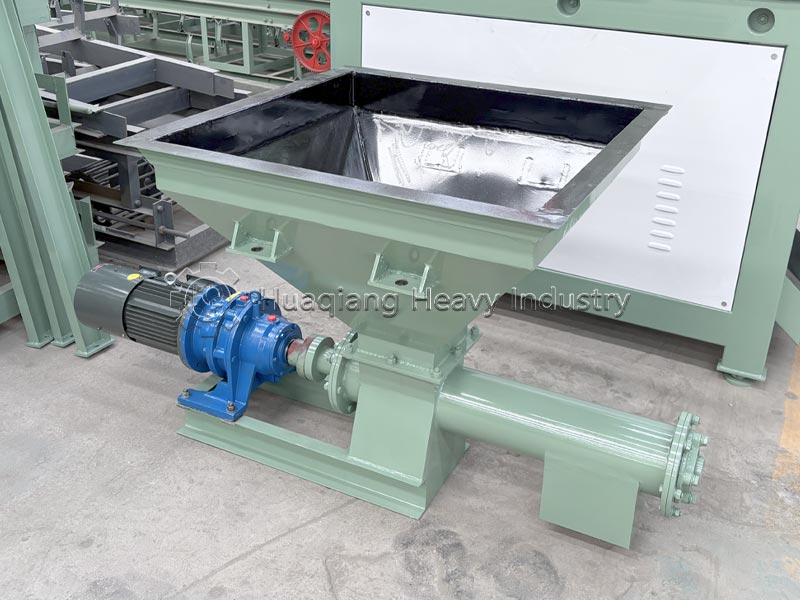
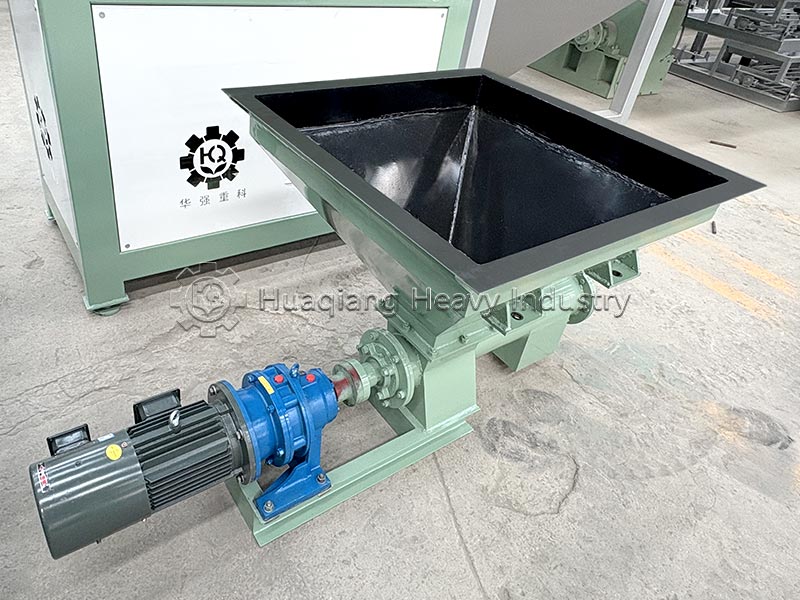
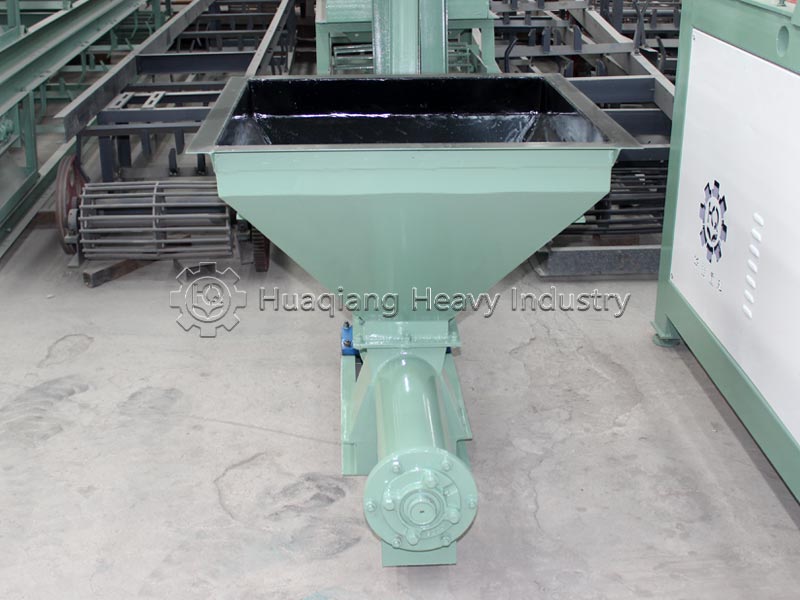
The screw conveyor is a reliable and easy-to-operate piece of equipment used in fertilizer production lines to transport materials between workstations. Unlike belt conveyors, it is unaffected by dust or wet materials; unlike bucket elevators, it requires no foundation pit, achieving enclosed transport simply through a screw shaft and a trough body. Operators need only monitor feed uniformity and motor current, while maintenance involves routine lubrication and checking the screw flights for wear—making it a hassle-free material handling solution for fertilizer workshops.
Working Principle
After material enters the conveyor trough, the rotating screw flights propel it axially. The rotation generates an axial force component, allowing the material to slide smoothly forward within the trough without generating dust or spilling. Conveying capacity is regulated by adjusting the screw rotation speed and feed rate; higher speeds result in greater throughput. By varying the screw pitch, the material can also be compressed or loosened during transport. Upon reaching the discharge outlet, the material is automatically unloaded under the combined influence of gravity and the thrust from the screw flights.
Operation Methods
Before startup, open the inspection port to ensure the trough is free of accumulated material and the screw flights are not loose or deformed. Start the equipment without a load, and once it is running smoothly, begin feeding material evenly.
The feed rate is controlled by an upstream feeder to ensure a stable, continuous flow. Monitor the motor current during operation; an abnormal rise in current may indicate a blockage or obstruction by hard objects.
To shut down, stop the feed first and allow the trough to empty completely before stopping the main unit. For long-term shutdowns, clear out any residual material to prevent hardening or caking, which could interfere with future startups.
Scope of Application
Organic fertilizer production lines: Transporting fermented materials, crushed materials, mixtures, and finished granules.
Compound fertilizer production lines: Transporting mixtures of various raw materials after batching.
Bio-organic fertilizer production: Low-speed, smooth transport of materials containing microbial agents.
Feed processing: Transporting powdered and granular feed ingredients and finished products.
Chemical powders: Enclosed transport of chemical raw material powders and granules.
| Size |
Screw Diameter(mm)
|
Rotation Speed (r/min) |
Capacity(m3/h)
|
|
LS160
|
160
|
112 | 9.7-3.2 |
| 90 | 7.8-2.6 | ||
| 71 | 6.2-2.1 | ||
|
56
|
4.9-1.6 | ||
|
LS200
|
200
|
100 | 16.9-5.6 |
| 80 | 13.5-4.5 | ||
| 63 | 10.7-3.6 | ||
|
50
|
8.5-2.8 | ||
|
LS250
|
250
|
90 | 29.9-9.9 |
| 71 | 23.5-7.8 | ||
|
56
|
18.5-6.2 | ||
|
45
|
14.9-5.0 | ||
|
LS315
|
315
|
80 | 52.9-17.6 |
| 63 | 41.6-13.9 | ||
|
50
|
33.1-11.0 | ||
|
40
|
26.4-8.8 | ||
|
LS400
|
400
|
71 | 85.3-28.2 |
| 56 | 67.3-22.4 | ||
|
45
|
54.1-18 | ||
|
36
|
43.2-14.4 |