
The core advantage of an NPK blending fertilizer production line is its flexible formulation. It can process various types of NPK blended fertilizers based on differences in crops, soil, and planting scenarios, not just a single category, all centered around "precise nutrient matching."
General-purpose field fertilizers are the most commonly processed category on the production line. With a balanced formulation, they are suitable for field crops such as corn, wheat, and rice. They can be applied directly without complex adjustments, balancing high yield and cost-effectiveness, making them suitable for large-scale planting.
Fruit and vegetable-specific blended fertilizers have formulations adjusted according to the growth characteristics of fruits and vegetables: leafy vegetables emphasize high nitrogen to promote leaf growth; melons and fruits emphasize high potassium to enhance fruit sweetness; and fruit trees focus on a balanced nitrogen, phosphorus, and potassium ratio, considering both branch, leaf, and fruit development, suitable for various fruit and vegetable plantings.
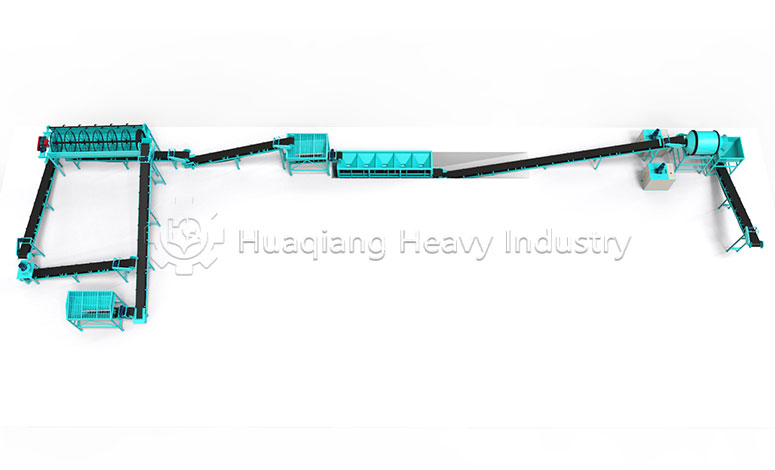
In addition, the NPK blending fertilizer production line can also process blended fertilizers specifically for cash crops and functional blended fertilizers. The former optimizes the formulation for cash crops such as cotton and peanuts, helping to improve yield and quality; the latter can add micronutrients or slow-release components, suitable for scenarios with poor soil and requiring long-term fertilization.
In summary, the NPK blending fertilizer production line can process a wide variety of products, relying on its flexible formulation capabilities to accurately match different planting needs, balancing practicality and targeted application.