
The accumulation of fallen leaves in late autumn, often considered a nuisance, has become a valuable, low-cost raw material for organic fertilizer plants. Utilizing fallen leaves for composting not only solves the environmental problem of leaf disposal but also enriches the supply of organic fertilizer raw materials and reduces production costs.
Step 1: Raw Material Collection and Pre-treatment.
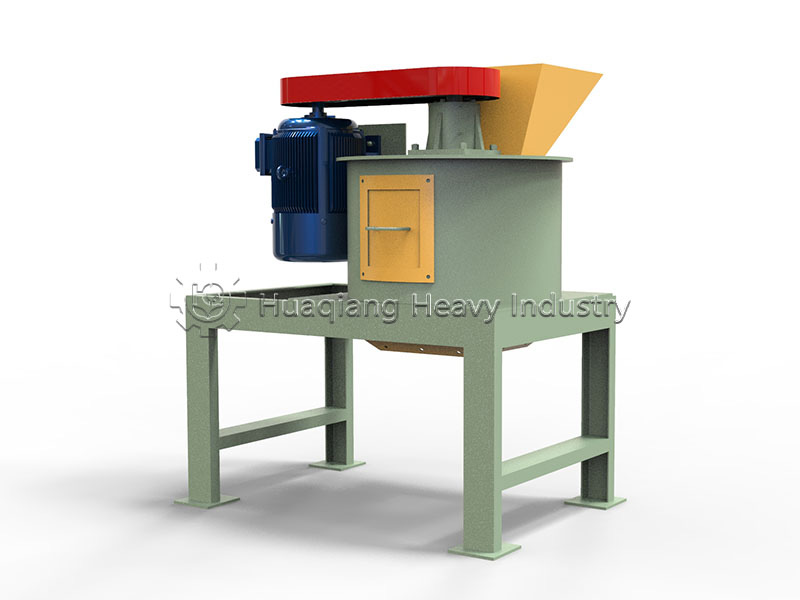
Organic fertilizer plants need to collect healthy fallen leaves in bulk from gardens, scenic spots, and other locations, avoiding diseased, moldy, or oil-contaminated leaves. The leaves are transported to the pre-treatment workshop via conveyor belts. Screening equipment is used to remove stones, branches, and other impurities, and then a fertilizer crusher is used to shred the leaves to a particle size of 2-3 centimeters to increase the surface area and accelerate the decomposition process.
Step 2: Scientific Proportioning and Mixing.
Fallen leaves are a carbon source material and need to be combined with nitrogen source materials such as livestock and poultry manure and fermentation agents at a carbon-to-nitrogen ratio of 25:1-30:1. A fertilizer mixer machine is used to uniformly mix the shredded leaves, nitrogen sources, and an appropriate amount of composting microorganisms. Water is sprayed to adjust the moisture content to 55%-60%, providing a suitable environment for microbial fermentation.
Step 3: Large-Scale Fermentation and Management.
The mixed materials are transferred to fermentation tanks, using either windrow or trench composting methods. An organic compost turning machine is used for regular turning to ensure proper aeration of the compost pile. The pile temperature is monitored throughout the process, maintaining a high temperature of 55-65°C for 15-20 days. This kills pathogens and insect eggs while promoting the decomposition of organic matter.
Step 4: Post-Composting Processing.
Once the compost turns dark brown, becomes loose in texture, and has no odor, the composting process is complete. After screening to remove undecomposed impurities, the compost can be mixed with other nutrient materials according to market demand. A organic fertilizer granulator is used to produce granular organic fertilizer, which is then dried, cooled, and packaged before being stored in the warehouse as a qualified commercial organic fertilizer.