
Many investors struggle with choosing between organic fertilizer and NPK compound fertilizer production lines when building a new fertilizer processing plant. The two types of production lines differ significantly in initial investment, operating expenses, and maintenance costs, directly impacting the barrier to entry and profit margins.
The difference in initial infrastructure and equipment investment is immediately apparent. Organic fertilizer production lines have simpler processes and more streamlined equipment configurations, requiring less plant area and ceiling height, resulting in lower infrastructure and equipment investment and a lower barrier to entry, making them suitable for small and medium-sized start-up processing plants. NPK compound fertilizer production processes are more complex, requiring more complete sets of equipment for batching, granulation, and drying, and demanding higher site layout standards, significantly increasing initial fixed investment.
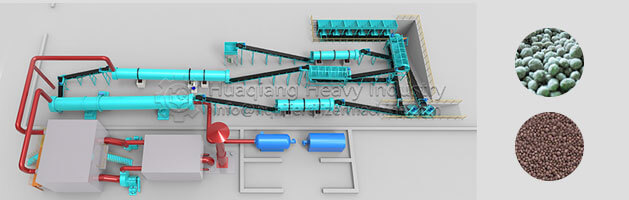
Raw material costs are the biggest difference between the two. Organic fertilizer mainly relies on agricultural waste such as livestock manure, straw, and mushroom residue, resulting in extremely low raw material acquisition costs and only minor auxiliary material expenses, making production costs controllable. NPK compound fertilizer requires the purchase of industrial raw materials such as urea and phosphate fertilizers, which have high unit prices and fluctuate frequently, representing a core cost expenditure in production.
Energy consumption, operation and maintenance, and payback periods also differ significantly. Organic fertilizer production lines have low energy consumption and minimal equipment wear, resulting in low daily maintenance costs. However, the profit per ton is relatively low, relying primarily on volume sales for profitability. NPK production lines have high energy consumption and faster wear and tear on vulnerable parts, leading to higher maintenance expenses. However, the finished product has high added value, a stable market price, and a faster payback period after scaling up production.
In summary, organic fertilizer production lines involve low investment and low risk, making them suitable for small-scale production. NPK compound fertilizer production lines have higher investment and operating costs, making them more suitable for large-scale, standardized fertilizer production projects.