
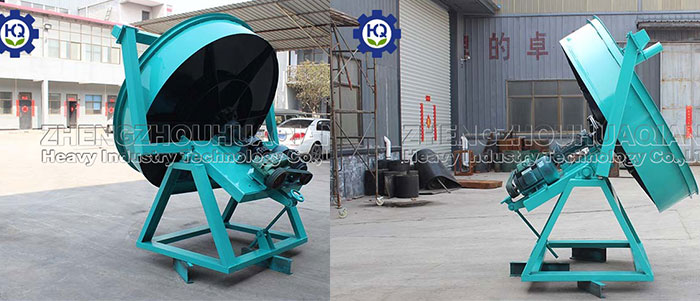
Disc granulators are efficient, energy-saving machines for shaping fertilizers into pellets. They're widely used to process compound fertilizers, organic fertilizers, bio-fertilizers, and other granular fertilizers. Key features include a high pelletization rate, low energy consumption, and strong adaptability.
1.Compound Fertilizers
High, medium, and low-concentration compound fertilizers: Can produce pellets with different nutrient ratios by adjusting the formula.
Bulk blend fertilizers (BB fertilizers): Mixes and granules various single-nutrient fertilizers together, improving fertilizer efficiency and uniformity.
Advantage: Produces uniform, strong pellets, ideal for large-scale industrial production.
2.Organic Fertilizers
Manure-based organic fertilizers: Like processed chicken, pig, or cattle manure.
Food waste organic fertilizers: Made from recycled, properly treated organic waste.
Advantage: Binders (like bentonite or starch) can be added to improve pellet formation. Works well for small-to-medium organic fertilizer plants.
3.Bio-organic and Microbial Fertilizers
Microbial fertilizers: Pellet carriers for functional agents like nitrogen-fixing or phosphorus-solubilizing bacteria.
Organic-inorganic compound fertilizers: Combines organic matter with chemical nutrients to boost soil activity.
Advantage: Low-temperature granulation avoids killing beneficial microbes, ensuring microbial activity.
4.Specialty Functional Fertilizers
Slow/controlled-release fertilizers: Extends nutrient release through coating or binding techniques.
Secondary and micronutrient fertilizers: Pellet fertilizers containing calcium, magnesium, sulfur, zinc, etc.
Advantage: The disc granulator's tilt angle and rotation speed can be adjusted to suit different material granulation needs.
In short, disc granulators provide an efficient pelletizing solution for both large chemical fertilizer plants and smaller organic fertilizer operations, helping the fertilizer industry improve quality and efficiency.